DAVID
GONZALEZ
Data Scientist
ZeitZuHelfen
Project Category
Project Overview
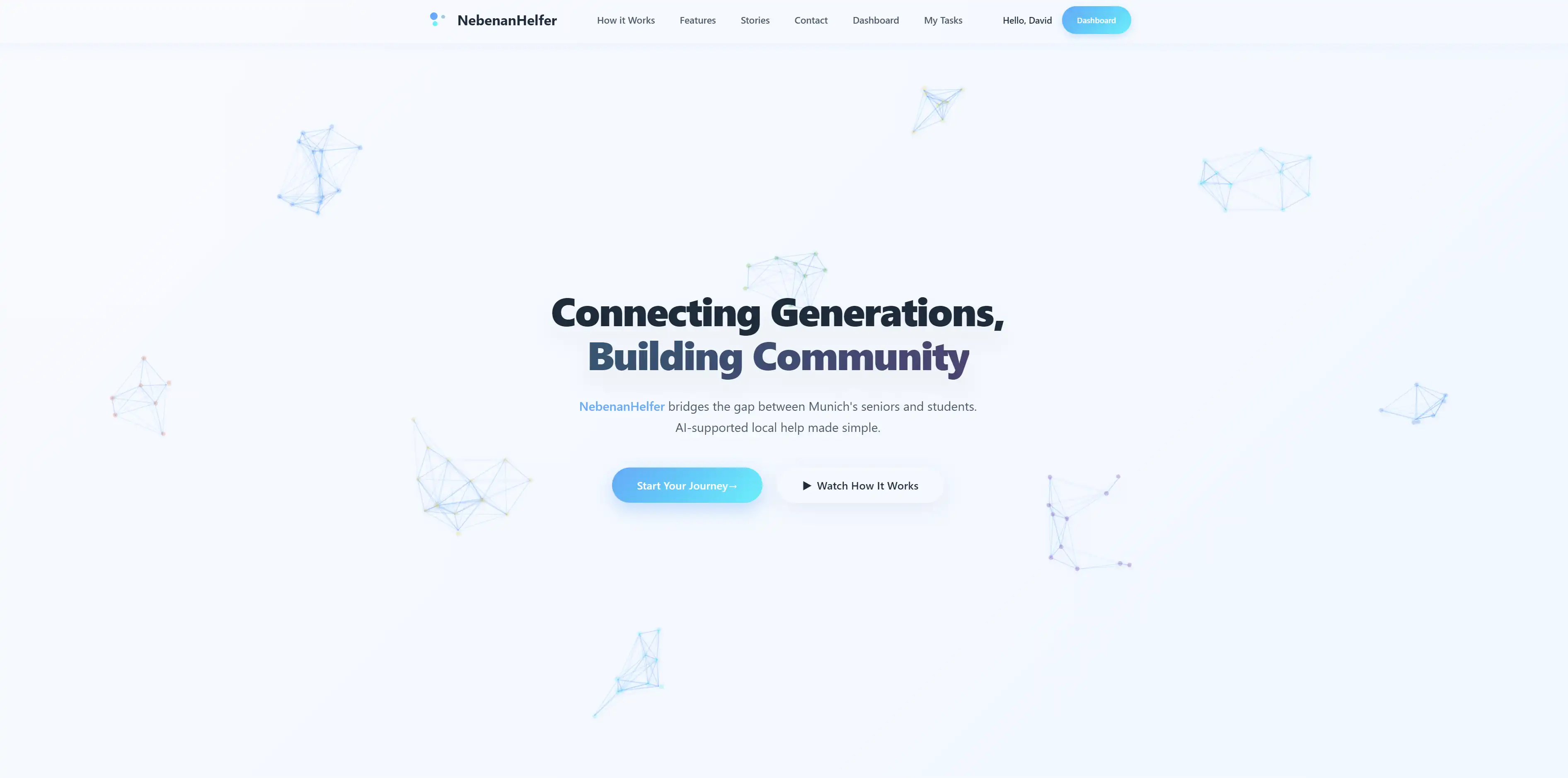
ZeitZuHelfen is a help request platform that bridges the gap between seniors needing assistance and students willing to help. An AI voice-first interface that allows seniors to request help by simply speaking, no typing, no forms, just conversation. For students, a way to engage with the Munich community while earning some rewards.
Challenge
Selecting the correct LLM for speech-to-text and data processing. Synchronizing Telegram webhooks, ngrok tunnels, and FastAPI endpoints was tricky. Ensuring a smooth user experience for seniors using voice commands required careful design and testing.
Approach
Voice-First Pipeline: Built a Telegram-based voice system
where seniors send audio requests; FFmpeg handles audio
conversion and Google Gemini extracts structured data and
detects emergencies.
Backend Architecture: Developed a FastAPI backend using
async SQLAlchemy, Pydantic validation, and environment-based
configuration; runs alongside a Telegram bot server sharing a
SQLite database.
Request & User Management: Created endpoints for
registration, authentication, and request status transitions for
seniors and students.
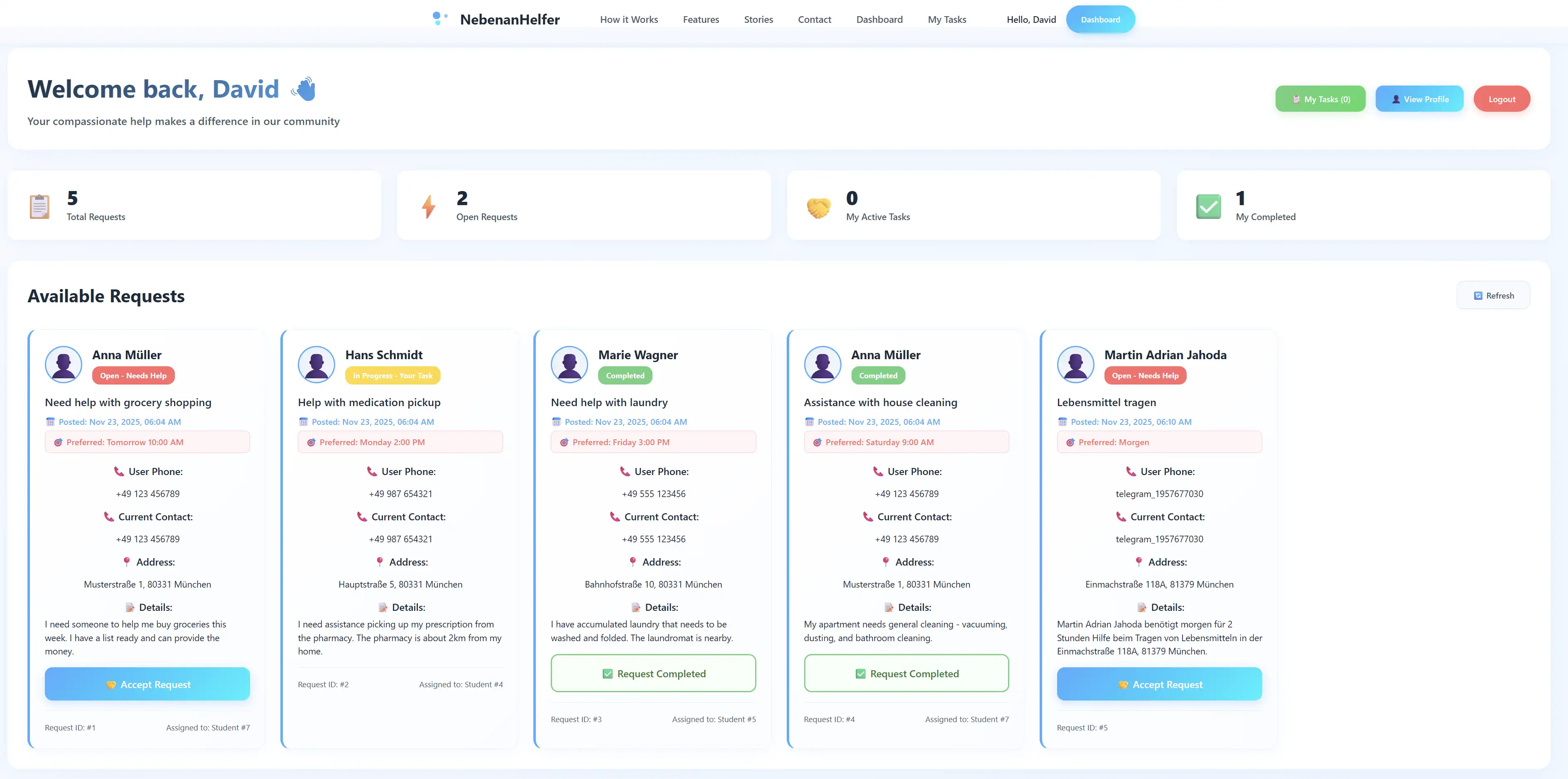
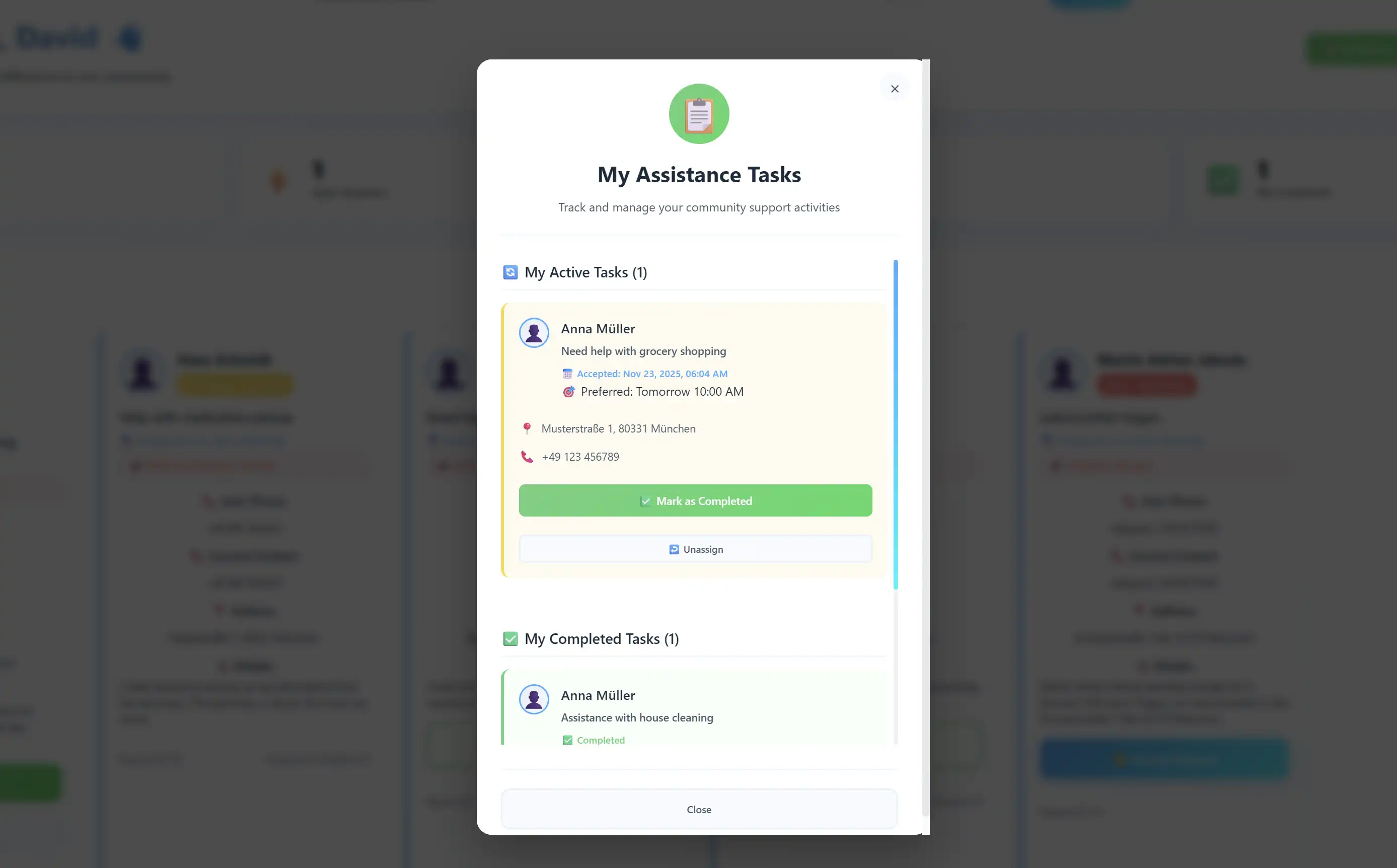
Student Interface: Exposed REST APIs enabling students to
browse, accept, and complete help requests through a lightweight
web interface.
Results & Impact
- Enabled seniors to request help using simple AI voice messages—no typing or apps required.
- Achieved reliable real-time transcription and structured data extraction using Google Gemini.
- Delivered a fully operational end-to-end system connecting seniors and student volunteers.
- Built a scalable two-server architecture with clean REST APIs for seamless student interaction.
Gallery
Key Features
- Voice-first help requests via Telegram with AI-powered transcription.
- Automated address validation, confirmation flow, and emergency detection.
- Web interface for students to browse, accept, and complete requests.
Lessons Learned
Building a voice-first system highlighted the complexity of
handling real-world speech, incomplete information, and diverse
speaking styles. Designing a reliable confirmation flow and
managing multi-step conversations without confusion were key
challenges. Integrating multiple external services—Telegram,
FFmpeg, Google Gemini, and address validation—required careful
error handling and async coordination.
Next time, I would add dedicated session management earlier (e.g.,
Redis) to improve scalability and support multiple simultaneous
senior conversations. I also learned the importance of designing
prompts and user flows that remain simple, especially for
non-technical users.
Future Improvements
- Add security code verification and push notifications for students.
- Develop a mobile app and implement automatic student–senior matching based on location and availability.